Work · A 3D touchscreen kiosk for places visitors can't reach
Vizcaya Museum & Gardens
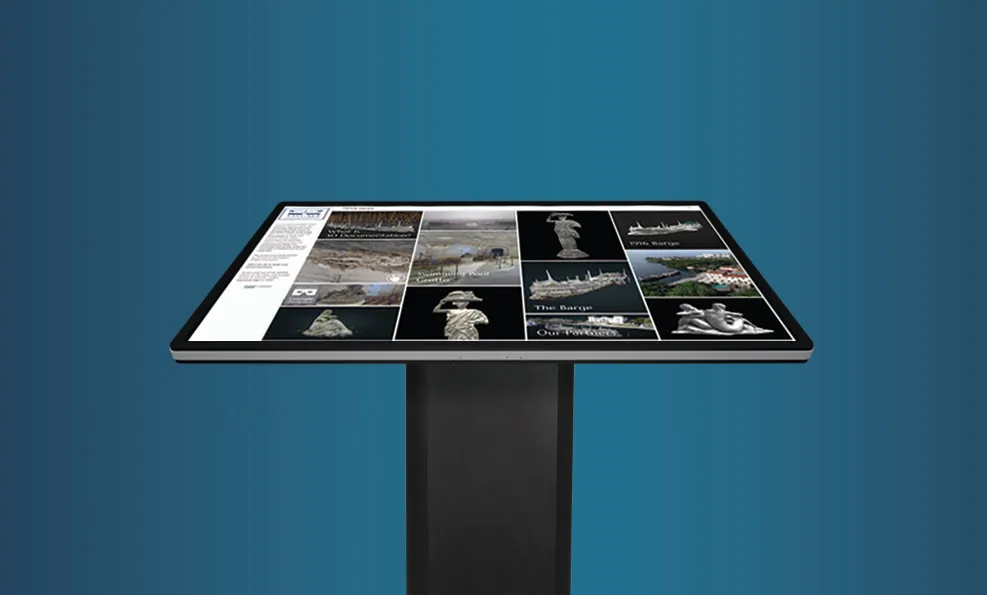
With a Knight Foundation grant, Vizcaya asked us to let visitors explore parts of the estate closed by sea-level rise and age. We built an offline 3D touchscreen kiosk and a matching website.
Miami, Florida · 2018 · Concluded project
What they needed
Vizcaya is a century-old seaside estate in Miami. Rising seas and age-related damage had closed several historically and artistically important areas to visitors.
The museum needed to document those areas for preservation and still give visitors a way to see and understand them. We helped Vizcaya meet the technical requirements of its successful application to the Knight Foundation.
What we built
The kiosk combined historical records with laser-scan and photogrammetry data from university partners. Visitors took a virtual self-guided tour of two closed areas: the swimming pool grotto with its ceiling mural by Robert W. Chanler, and the Barge, the carved breakwater by Alexander Stirling Calder.
Visitors could examine details up close, learn about conservation issues, and step back in time to see the spaces as they were first built. Large 3D models and point clouds ran in the browser, and because connectivity in the museum was unreliable, the kiosk worked fully offline. A mobile-friendly website offered the same content outside the museum.
What happened
The project gave the public a view of spaces they couldn't otherwise visit, and the 3D documentation also fed Vizcaya's own work measuring surface loss and the effects of sea-level rise.
Working with Daruma has been exciting, as both the museum and the firm are experimenting with new interpretive technologies that will change the way visitors experience aspects of historic sites.